What is coal?
Coal combustion description.
Coal power plants and air pollution:
Mechanisms and control technologies
Coal;
Inhomogeneous organic fuel formed mainly from decomposed plant matter.• Over 1200 coals have been classified.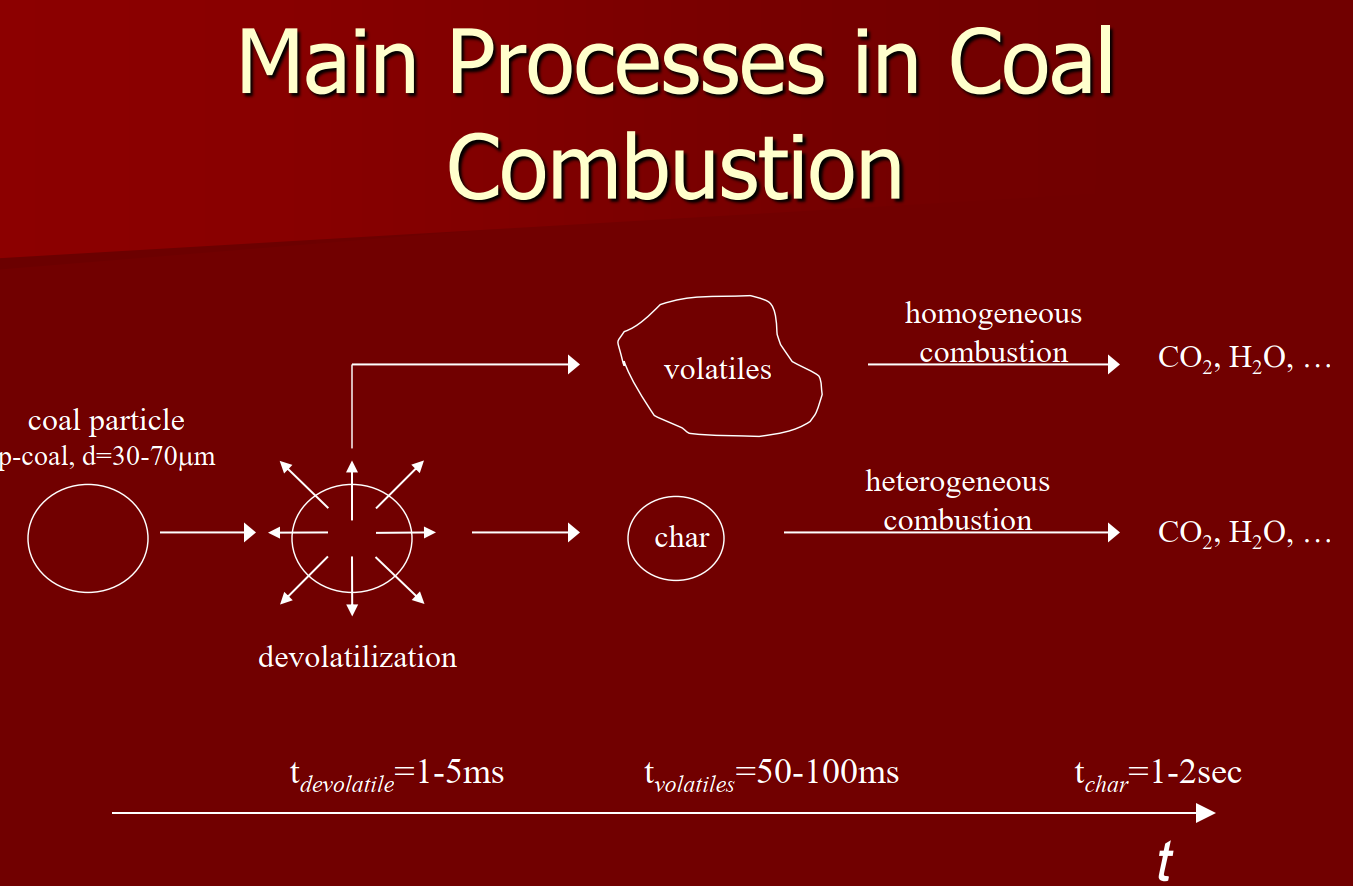
The physical processes influencing pulverized coal combustion
- Turbulent/swirling flow of air and coal.
- Turbulent/convective/molecular diffusion of gaseous reactants and products.
- Convective heat transfer through the gas and between the gas and coal particles.
- Radiative heat transfer between the gas and coal particles and between the
coal/air mixture and the furnace walls.
Carbon Dioxide, CO2
C + O2 CO2
Almost 99% of C in coal is converted to CO2.
In order to lower CO2 emission levels, coal power plants will have to leave steam-based systems (37% efficiency) and go towards coal gasification technology (60% efficiency).
Meanwhile, CO2 sequestration is being tested.
Carbon monoxide, CO
C + ½O2 CO
CO is minimized by control of the combustion process
(air/fuel ratio, residence time, temperature or turbulence).
Particulate Matter
PM composition and emission levels are a complex function of:
1. Coal properties,
2. Boiler firing configuration,
3. Boiler operation,
4. Pollution control equipment.
Bottom Ash Fly Ash
In PC power plants, since combustion is almost complete, the emitted PM is primarily composed of inorganic ash residues
Trace Metals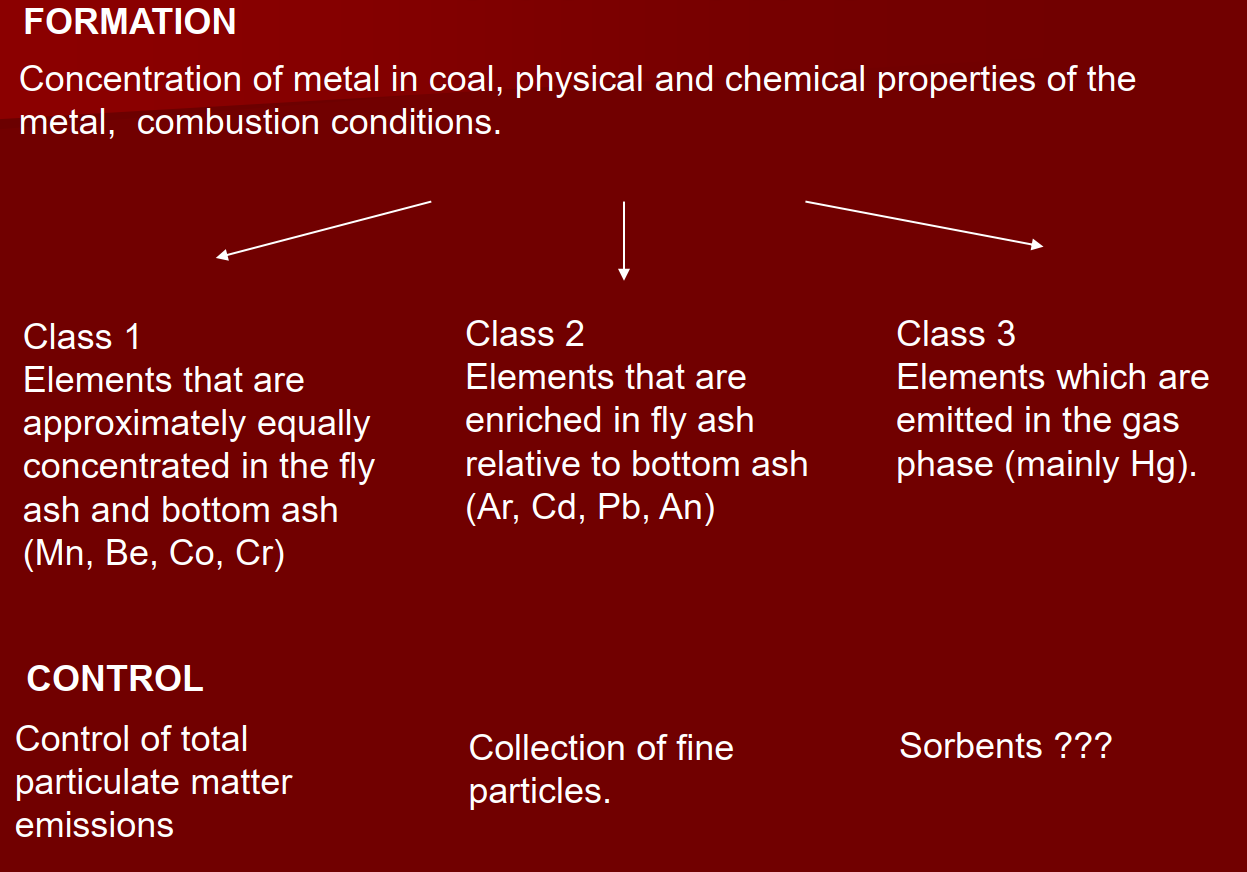
Organic Compounds
Include volatile, semivolatile and condensable organic compounds either present in the coal or formed as a product of incomplete combustion.
Characterized by hydrocarbon class: alkanes, alkenes, aldehydes, alcohols and substituted benzenes.
The main groups of environmental concern are:
1) tetrachloro- through octachloro- dioxins and furnans.
2) Polycyclic organic matter (POM).
Emissions dependent on combustion
behavior in the boiler (air/fuel ratio, residence time, temperature or
turbulence).
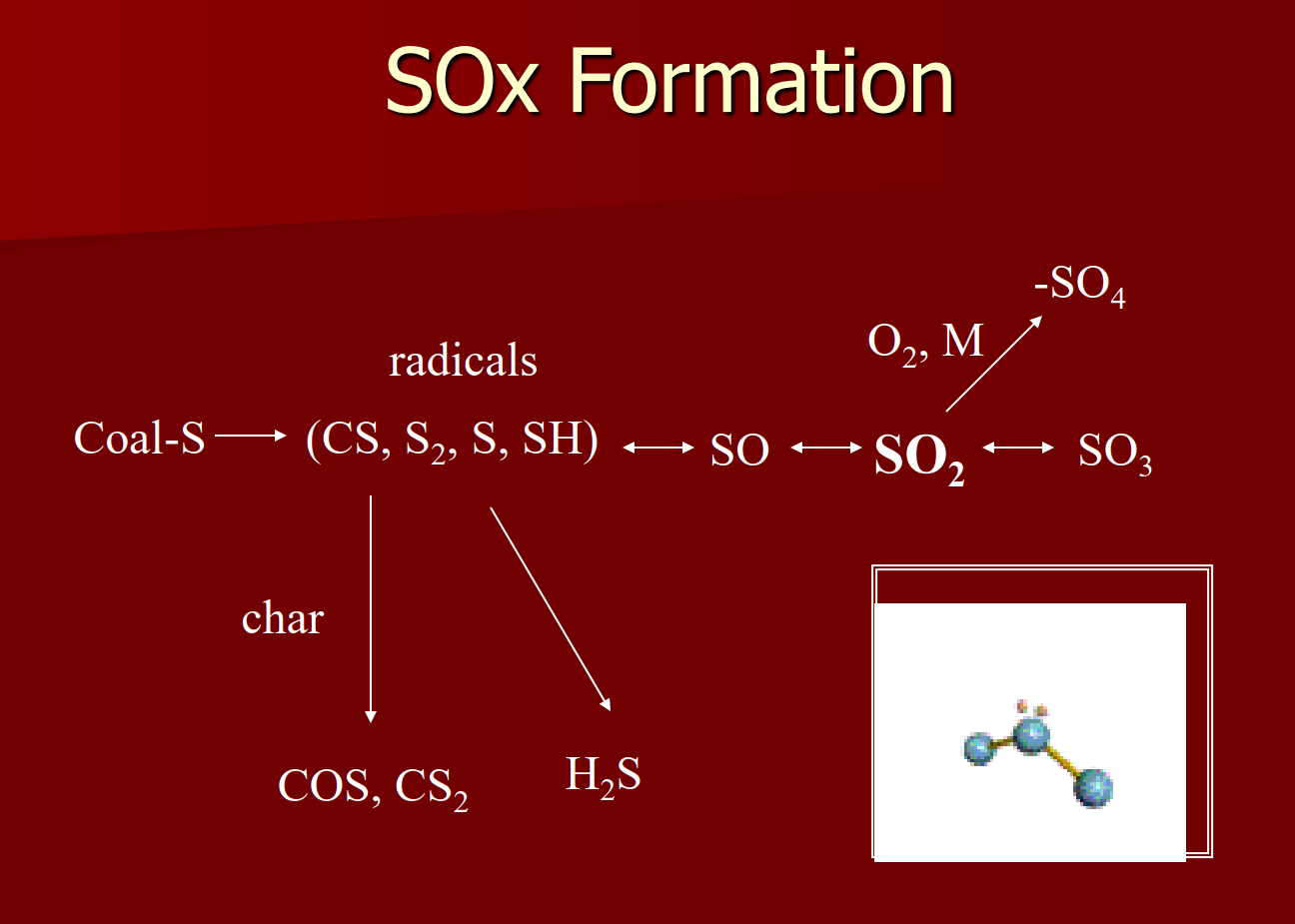
Sulfur in coal (<10%)
Organic sulfur (40%)
Chemically bonded to the hydrocarbon matrix in the forms of thiophene, thiopyrone, sulfides and thiol.
Inorganic sulfur (60%)
Imbedded in the coal, as loose pyrite - FeS2 or marcasite, and calcium/iron/barium sulfates.
Sources of sulfur in coal: Seawater sulfates, Limestone
SOx reduction
- Pre combustion removal:
- Physical cleaning (30-50% removal inorganic sulfur)
- Chemical and biological cleaning (90% removal
organic sulfur)
- Combustion configuration:
-No benign sulfur species!
-gasification combined-cycle systems (IGCC systems)
- Post-combustion removal:
- Wet Flue Gas Desulfurization (FGD) (80-98%)
- In situ sulfur capture:
- Dry Sorbent Injection (DSI) (50%)
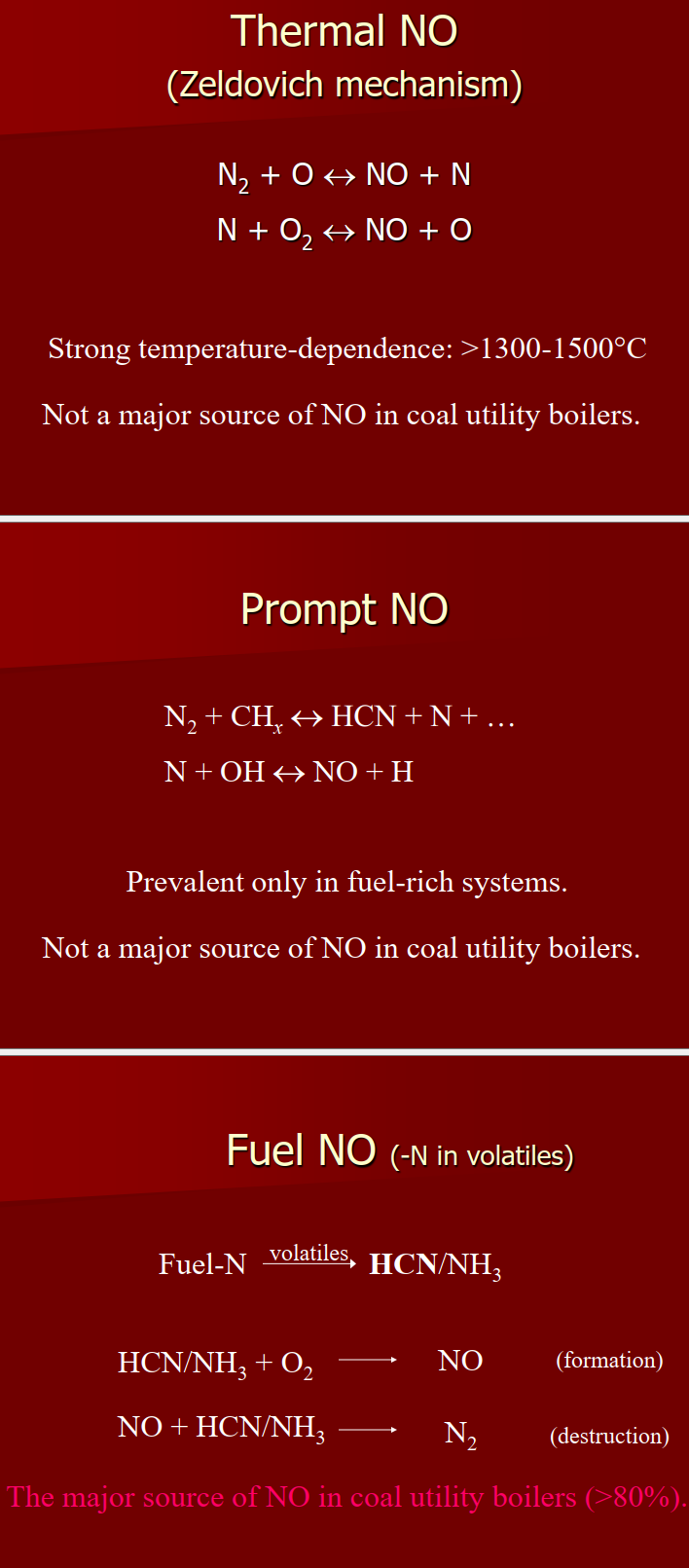
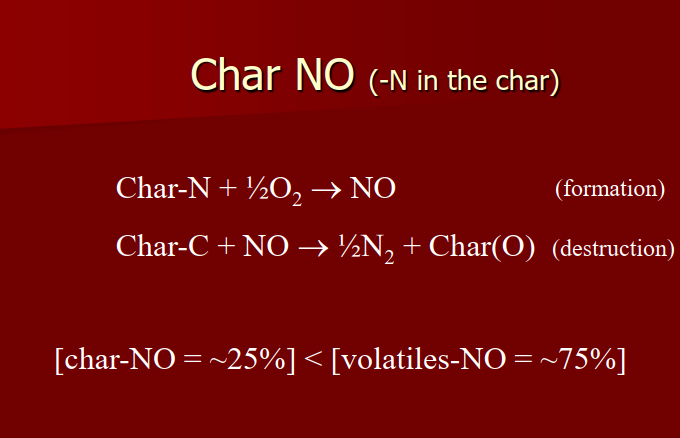
Nitrogen Oxides, NOx
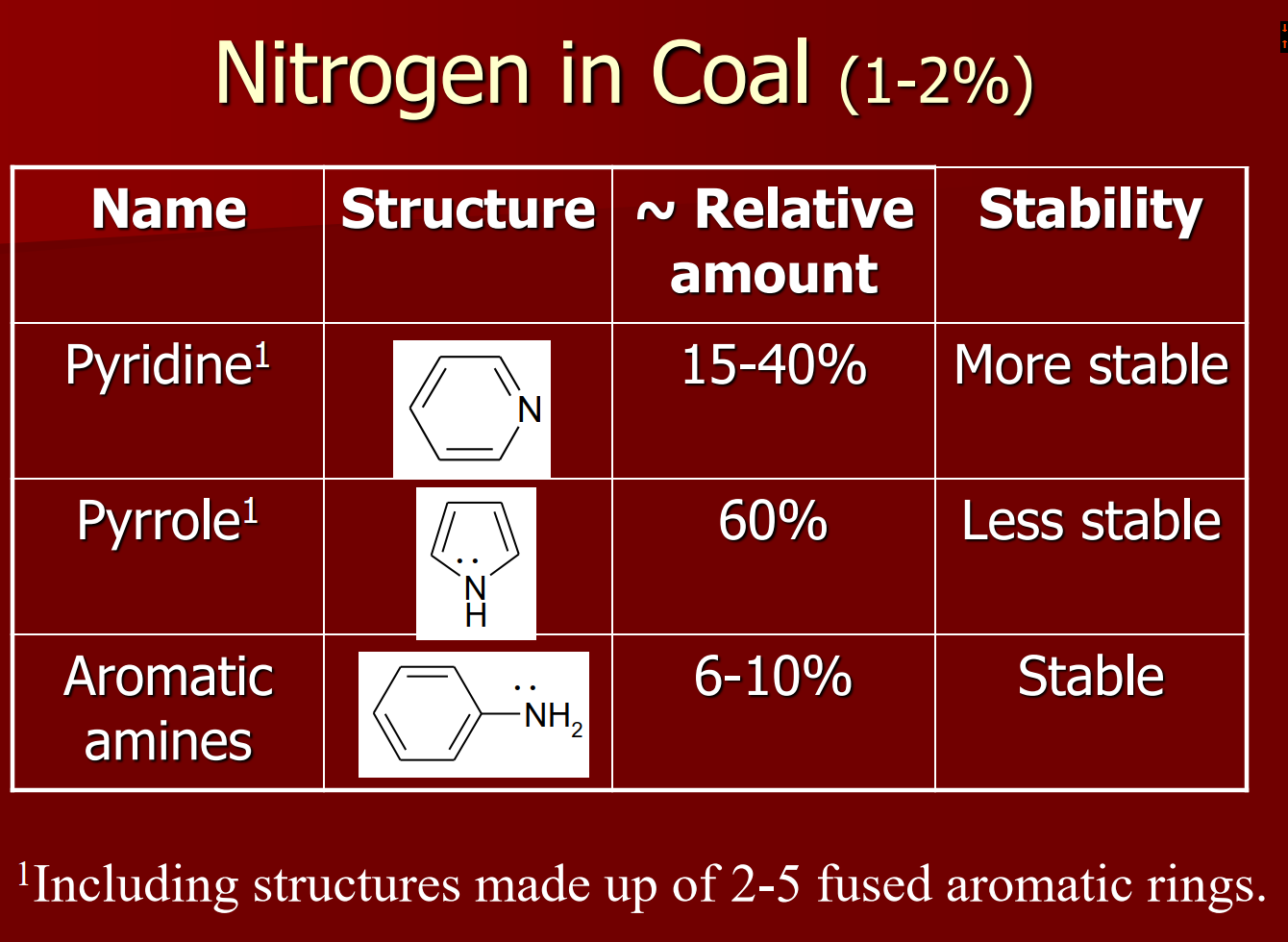
Nitrogen in Coal (1-2%)
NO Reduction
Combustion controls:
1. Modification of combustion configuration:
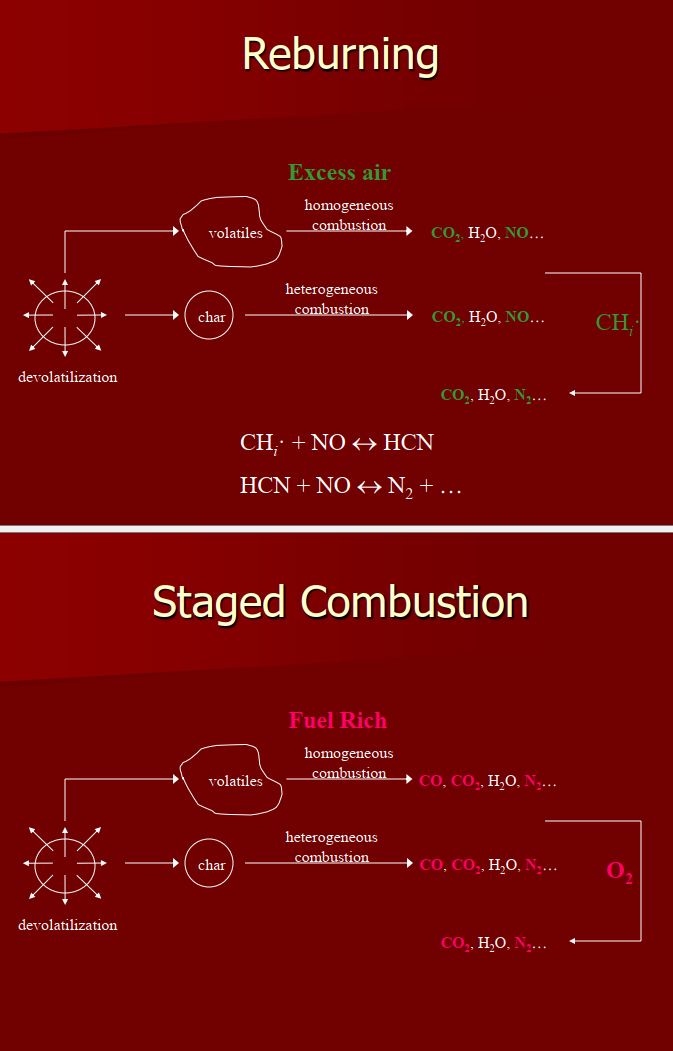
 Reburning
Staged Combustion (air/fuel)
Post combustion controls:
1. Injection of reduction agents in flue gas.
2. Post-combustion denitrification processes.
Reburning